
Solar Easements and Sunlight Access Rights Explained
Understanding solar easements and sunlight access rights protects your panel investment. Call (833)-212-3715 to compare local installers and plan ahead.

By Julia Walsh
Learn more about Solar Panel Installation and Repair for guides, costs, and what to expect.
Compare Solar Panel Installation and Repair Pros Near You
Enter your ZIP code to compare independent local professionals and request free quotes.
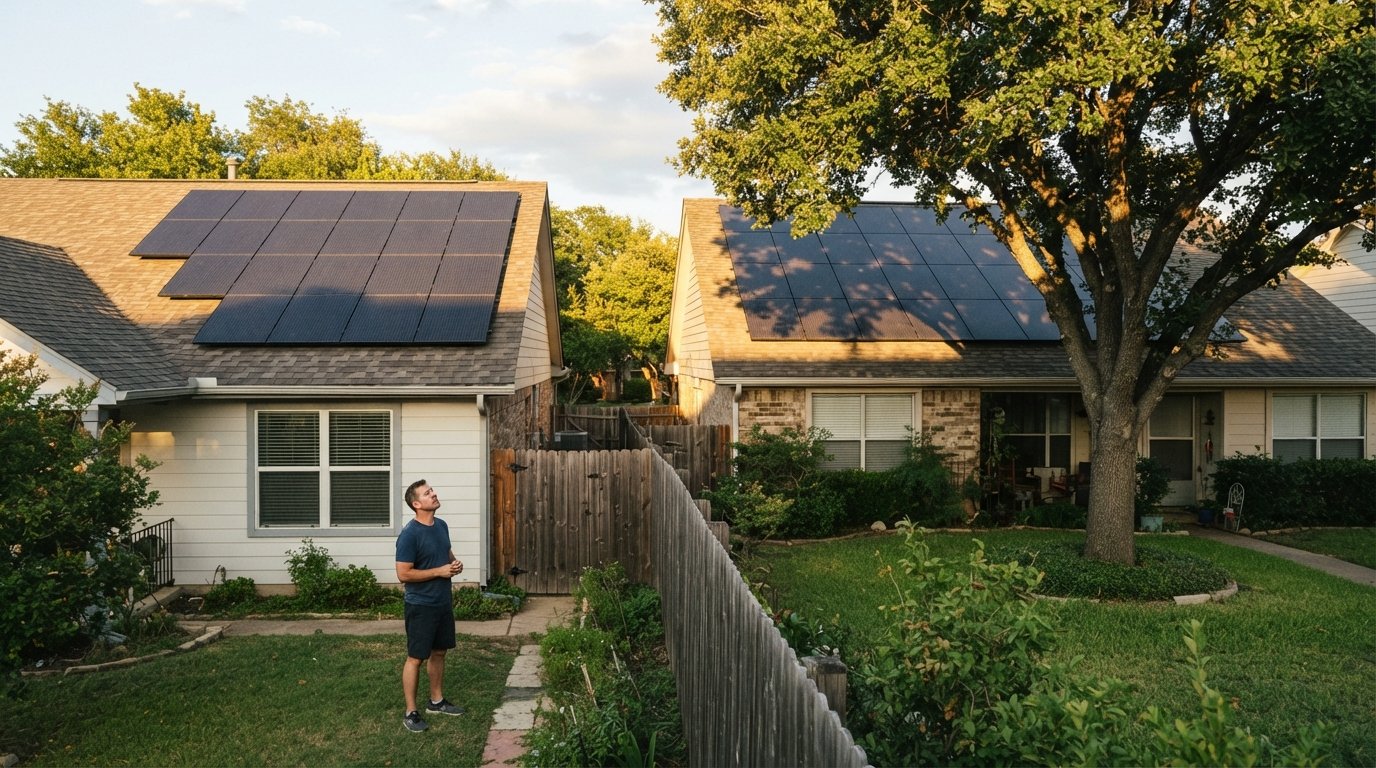
When you install solar panels, you are making a multi-decade bet on one thing: the sun will keep shining on your roof. But what happens when a neighbor plants a fast-growing tree that will eventually shade your array? Or when a new building next door casts a shadow over your panels? These are not hypothetical worries. They are the reason solar easements and sunlight access rights exist. Understanding these legal tools before you sign an installation contract can protect your investment for the entire 25 to 30 year life of your system. This guide walks you through how easements are recorded, what state laws actually guarantee, how to handle tree disputes, and how to negotiate an easement whether your panels are already installed or still in the planning stage.
What a Solar Easement Is and How It Gets Recorded
A solar easement is a legally binding agreement that prevents a neighboring property owner from blocking your access to sunlight. It is a type of property right, similar in concept to a utility easement that lets a power company run lines across your land. The easement is typically created between two private parties: the solar system owner (the beneficiary) and a neighbor whose trees, future construction, or landscaping could shade the panels. The agreement describes the specific area of the sky that must remain unobstructed, the hours of the day and seasons of the year when protection applies, and any restrictions on vegetation height or building placement.
What makes a solar easement powerful is that it is recorded with the property deed. That means it runs with the land, not just with the people who signed it. If your neighbor sells their house, the new owner is bound by the easement. If you sell your home, the easement typically transfers to the new owner along with the solar system. Recording happens at the county recorder's office or registry of deeds, and the document becomes part of the public record. Without recording, an easement may still be valid between the original parties, but it becomes far harder to enforce against future owners. For anyone investing $15,000 to $30,000 or more in a residential solar system, recording is not optional. It is the difference between a handshake and a legal shield.
The easement document itself should be specific. Vague language like "adequate sunlight" invites disputes. Strong easements specify azimuth angles, elevation angles, and the exact sky space that must stay clear. They also spell out remedies if the easement is violated, such as the right to demand tree trimming at the neighbor's expense or to seek court enforcement. Some easements include a compensation clause, where the solar owner pays the neighbor a one-time fee or annual payment in exchange for the restrictions. Others are granted for free as a neighborly accommodation. Either way, the agreement should be drafted or at least reviewed by a real estate attorney familiar with your state's property laws.
State Solar Access Laws: What They Do and Do Not Guarantee
More than half of U.S. states have enacted some form of solar access law, but the protections vary dramatically. At the strongest end, states like California, Colorado, and New Mexico have statutes that create a legal right to sunlight for solar energy systems. These laws may allow a solar owner to seek a court order requiring a neighbor to trim vegetation that has grown to block a previously unobstructed system. Some states also prohibit homeowners associations and local governments from adopting rules that unreasonably restrict solar installations. The details matter enormously: a law that protects existing systems may not protect a system you have not installed yet, and a law that covers trees may not cover new construction.
At the weaker end, many states offer no explicit solar access protection at all. In those jurisdictions, the common law doctrine of ancient lights, which historically protected long-standing windows from new construction, has been almost universally rejected in the United States. What remains is a patchwork of local ordinances, subdivision covenants, and nuisance law. Some cities have shade tree ordinances that restrict removal of mature trees, which can conflict with a homeowner's desire to trim for solar access. Others have solar-friendly zoning that protects panel placement. The practical takeaway is that you cannot assume a statewide right to sunlight. You must check your specific state statute, your county or city code, and any HOA rules that apply to your property.
Even in strong solar access states, the laws rarely guarantee perfection. They typically protect systems that were legally installed and operating before the shading began. They often require the solar owner to show that the obstruction is unreasonable or that the neighbor refused a reasonable request to remedy the situation. And enforcement usually requires going to court, which is slow and expensive. This is why solar easements remain valuable even in states with robust access laws: a recorded easement gives you a clear contractual right that is faster and cheaper to enforce than a statutory claim. For a deeper look at how these protections work in practice, see this guide on understanding solar easements and sunlight access.
Homeowners should also understand the difference between solar access laws and solar rights laws. Access laws focus on keeping sunlight unobstructed. Rights laws, sometimes called solar use statutes, protect your ability to install panels in the first place, overriding certain private covenants or local restrictions. A few states, including California and Utah, have both. Others have one but not the other. When you research your state, look for both categories and read the actual statutory text, not just a summary. The exact definitions of protected systems, the notice requirements, and the remedies available can determine whether a legal right is useful or merely symbolic.
Neighbor Tree Disputes: Trimming Rights and Mediation Steps
Tree disputes are the most common sunlight conflict homeowners face. The legal rules here are surprisingly consistent across most states, and they often favor the tree owner. The general rule is that a property owner has the right to trim branches and roots that cross the property line, but only up to the property line. You cannot enter a neighbor's yard without permission, and you cannot cut so much that you harm the health of the tree. If a tree on your neighbor's property shades your solar panels but does not cross the property line, you generally have no right to trim it unless a specific state statute or recorded easement says otherwise. This is the harsh reality that makes pre-installation planning so important.
When a dispute arises, the worst approach is to start cutting or to send an angry letter. A structured, documented process works far better. Here is a practical sequence that keeps you on the right side of the law and preserves the relationship with your neighbor:
- Document the shading. Use a solar monitoring app or a shade analysis tool to show exactly how much production you are losing and when. Quantified losses are far more persuasive than complaints.
- Talk to your neighbor first. In person, calmly, with the data in hand. Many disputes end here because most people are reasonable when approached respectfully and shown real numbers.
- Put the request in writing. A friendly letter that summarizes the conversation, the shading issue, and a proposed solution creates a record and shows good faith.
- Offer to share costs. Paying for a professional trimming or offering to split the bill often resolves the issue faster than legal threats.
- Try mediation before litigation. Many communities offer low-cost mediation services. A mediated agreement can be recorded as an easement, giving you lasting protection.
If those steps fail, you may need to consult a real estate attorney about your options under state law. In states with solar access statutes, the attorney can advise whether you have a statutory claim and what remedies are available. In states without such laws, your options are narrower and may depend on local ordinances or nuisance principles. Either way, the cost of legal action usually dwarfs the cost of a negotiated solution, so keep the door open to compromise even after you involve a lawyer. And if you are still in the planning phase, talk to your installer about panel placement that minimizes future shading risk before you finalize the design.
Negotiating a Solar Easement Before or After Installation
The best time to negotiate a solar easement is before your panels go up. At that stage, you have maximum leverage because you can choose a different roof plane, adjust the array layout, or even walk away from a property if the sunlight situation is hopeless. Start by identifying which neighbors could realistically shade your proposed system, now or in the future. A professional shade analysis will show you the sun's path across the sky for your location and highlight which trees or structures are in the critical zone. Then approach those neighbors early, explain your plans, and propose an easement that protects the specific sky space your system needs.
If your panels are already installed, you still have options. The most common scenario is that a neighbor's tree has grown into the protected zone, or a new neighbor is planning construction that would shade your array. In that case, an easement can be negotiated after the fact, but you will likely need to offer something in return: a one-time payment, help with tree maintenance, or a reciprocal agreement that limits your own future construction. The key is to be specific about what you need and to put everything in writing before any money changes hands. A recorded easement signed after installation is just as enforceable as one signed before, provided it is drafted correctly and recorded properly.
Here is what a strong negotiation checklist looks like, whether you are before or after installation:
- Define the protected sky space with angles and time windows, not vague language.
- Specify which trees or structures are covered and what height limits apply.
- State who pays for trimming or removal if the easement is violated.
- Include a duration clause, ideally perpetual and running with the land.
- Record the easement at the county registry and get a recorded copy.
One more consideration: easements can affect property value and marketability for both parties. A neighbor may resist signing because they worry the easement will scare off future buyers. In practice, a well-drafted, narrow easement rarely harms resale, and it can even be framed as a neighborhood benefit. If you are working with a solar installer, ask whether they provide easement templates or can connect you with an attorney who specializes in solar property law. Many reputable installers have seen these negotiations before and can guide you through the process. For homeowners who want independent information on system design, incentives, and installer vetting, SolarEnergy.ai offers extensive educational resources that complement the quote comparison services available through NewSolarQuotes.
Finally, remember that solar easements are only one piece of the sunlight access puzzle. Your overall protection comes from combining a recorded easement, a clear understanding of your state's solar access statutes, a realistic shade analysis, and a good relationship with your neighbors. Homeowners who plan ahead and document everything consistently report fewer disputes and better system performance over time. If you are still comparing installers or want help evaluating your property's sun exposure before you commit, request free quotes from certified local professionals who can assess shading risk and advise on easement needs as part of the design process. Protecting your sunlight today is the surest way to protect your solar savings for decades to come.
Learn more about Solar Panel Installation and Repair for guides, costs, and what to expect.
Compare Solar Panel Installation and Repair Pros Near You
Enter your ZIP code to compare independent local professionals and request free quotes.