
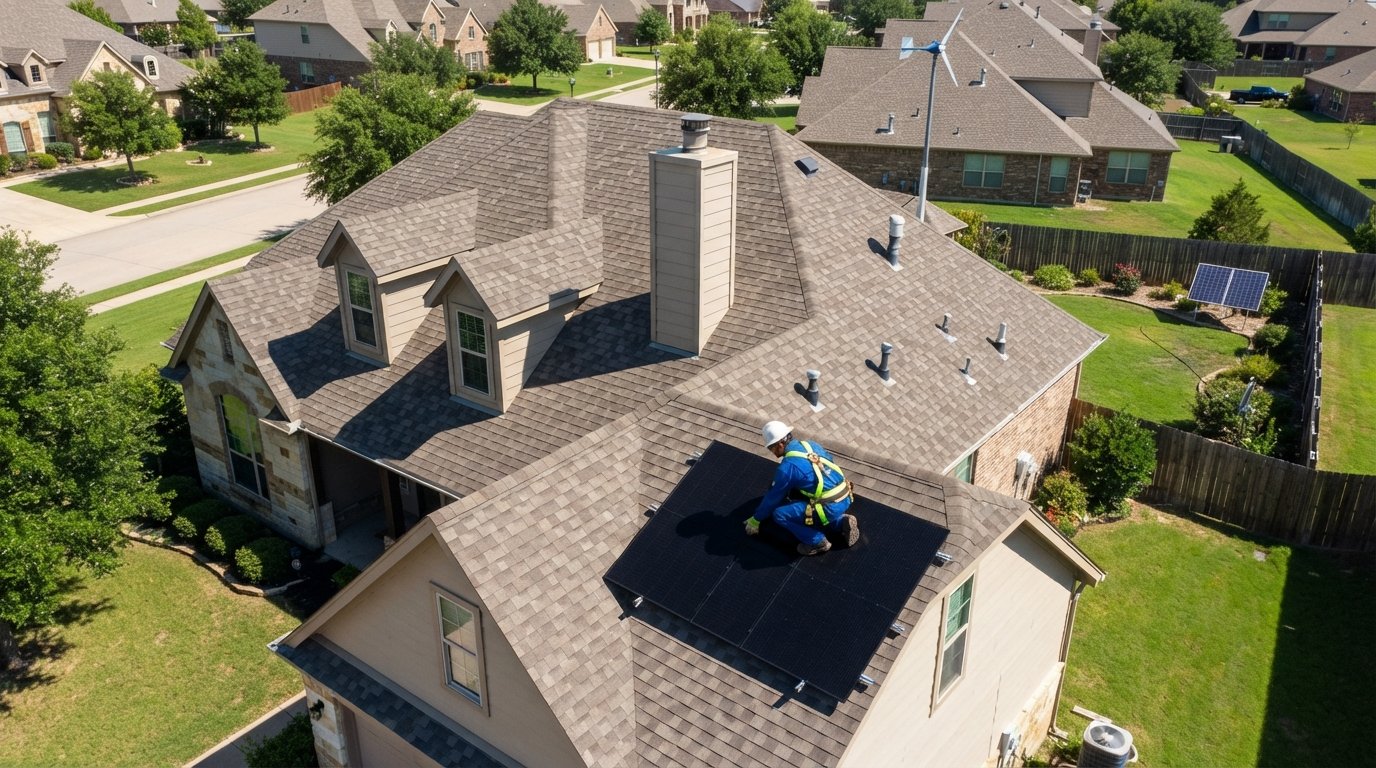
Solar for Homes With Limited Roof Space: Solutions
Limited roof space? Explore solar solutions and alternatives that still cut bills. Call 8332123715 for guidance on your best option.

By Alex Carter
Learn more about Solar Panel Installation and Repair for guides, costs, and what to expect.
Compare Solar Panel Installation and Repair Pros Near You

Enter your ZIP code to compare top-rated local professionals and request free quotes.
Your roof is shaded, small, or crowded with vents and chimneys. Does that rule out solar savings entirely? Not even close. Millions of American homes sit on lots where a traditional south-facing array will not fit, yet homeowners in those exact situations still cut their electric bills every month. The trick is knowing which workarounds fit your property, your budget, and your local utility rules. This guide walks through the most effective solar for homes with limited roof space solutions and alternatives, from high-efficiency panels to ground mounts, community solar, and even small wind or hydro options. By the end, you will know exactly which path to research first.
Why Limited Roof Space Does Not Mean Limited Savings
Solar panels have become dramatically more powerful over the past decade. A modern residential panel can produce 400 watts or more while measuring roughly the same size as a 250-watt panel from 2015. That means a roof that could only host a 4 kW system ten years ago may now support 6 kW or more with the same footprint. Higher efficiency also matters for strange layouts: if your usable area is broken into three small rectangles between dormers, panels with efficiency ratings above 21 percent let you harvest more power per square foot.
Beyond panel technology, the definition of limited roof space has changed. Utilities in most states now allow behind-the-meter batteries, virtual net metering, and shared solar subscriptions. A homeowner with a heavily shaded north-facing roof in a dense city can sometimes subscribe to a community solar farm and see credits on their bill without a single panel on their property. The rest of this guide breaks these options into two groups: solutions that still use your roof, and alternatives that move generation somewhere else entirely.
Roof-Based Solutions: Squeeze More Power From the Same Square Footage
If you want to keep generation on your property and your roof is structurally sound, start here. These approaches maximize every usable inch before you consider moving the array off the roof. A reputable installer will measure shading, structural load, and local setback requirements before recommending any of them, so treat this section as a menu to discuss, not a DIY blueprint.
The most common roof-based strategies include:
- High-efficiency monocrystalline panels: Premium panels convert 21 to 23 percent of sunlight into electricity, so fewer panels cover the same load. Expect a higher price per watt, but the math often works when space, not budget, is the binding constraint.
- Microinverters or DC optimizers: These electronics let each panel operate independently, which is critical when part of the array sits in shade or faces a different direction. You lose less output from awkward layouts.
- East-west arrays at lower tilt: Splitting panels between east and west roofs flattens your production curve across the day and can actually increase self-consumption if you pair the system with a battery.
- Solar tiles and shingles: If you are already replacing your roof, integrated solar tiles remove the mounting hardware footprint and can fit around chimneys more cleanly than rack-mounted panels.
- Garage, porch, and shed roofs: Detached structures on the same property often qualify for the federal tax credit and net metering, and they are frequently less shaded than the main house.
One caveat: high-efficiency panels and microinverters raise your upfront cost, so run the numbers carefully. A 5 kW premium system that fits your roof may cost more than a 7 kW standard system on a bigger roof, but the premium system still beats buying zero solar. If you are unsure which panel tier matches your space and budget, a solar panel selection tool can shortlist options before you talk to installers. Also confirm your roof has at least 10 to 15 years of life left; paying to remove and reinstall panels for a reroof later erases years of savings.
Ground-Mounted Solar: The Most Popular Alternative
When the roof truly cannot carry the load, the yard usually can. Ground-mounted systems use the same panels and inverters as roof arrays, but they sit on steel or aluminum racks anchored to concrete footings or driven piers. You are not limited by roof pitch or orientation, so you can tilt the array at the optimal angle for your latitude and even add manual or motorized seasonal adjustment for a few extra percentage points of production.
Ground mounts shine in several situations. Homes with heavy tree cover on the south side of the roof can often clear the shade by placing the array 50 to 100 feet away in an open lawn. Properties with older roofs avoid the reroof problem entirely. And if you own acreage, you can size the system to cover 100 percent of your usage plus a future electric vehicle, something a cramped roof may never allow.
The tradeoffs are real but manageable. You will need trenching for conduit from the array to your main panel, which adds cost and requires local permits. Some homeowners associations restrict visible ground arrays, so check covenants early. And you should plan for landscaping: mowing around racks is annoying, and panels low to the ground can be damaged by lawn equipment or snow sliding off in cold climates. A common compromise is a elevated ground mount tall enough to mow under, which costs more but solves most maintenance headaches.
Community Solar and Shared Solar Programs
If your roof is shaded, rented, or simply too small, community solar may be the fastest path to savings. In a community solar arrangement, you subscribe to a share of a large off-site solar farm, and the utility credits your bill for the electricity your share generates. You typically receive a discount of 5 to 15 percent on the credited amount, meaning you save money without any installation, maintenance, or roof work.
Availability varies by state. Programs are robust in Minnesota, Colorado, Illinois, New York, and Massachusetts, and they are expanding in several others. The main catch is that community solar is a subscription, not an asset: you do not own the panels, you usually cannot claim the federal tax credit, and you may face a cancellation fee if you move. Still, for renters and homeowners with unusable roofs, it is often the only realistic way to participate in solar. Ask your utility whether it offers a program, or search your state's public utility commission website for authorized providers.
Small Wind, Micro-Hydro, and Other Generation Alternatives
Solar is not the only renewable technology that works on a small property. Small wind turbines can supplement or replace solar when you have at least one acre of open land and average wind speeds of 10 mph or higher. A 5 kW turbine can offset a meaningful share of a home's usage, though taller towers (80 to 120 feet) dramatically improve performance, and some municipalities cap tower height. Expect more maintenance than solar because turbines have moving parts.
Micro-hydropower is even more niche but extremely effective where it fits. If your property has a stream or spring with at least 10 feet of vertical drop and steady year-round flow, a micro-hydro turbine can run 24 hours a day, often outperforming solar on a per-dollar basis. Permitting is the hard part: water rights, environmental review, and local regulations all apply. For most homeowners, the practical ranking is solar first, small wind second, micro-hydro only if you already have the water resource.
Financing and Incentives That Make Small Systems Worth It
Smaller or unconventional systems still qualify for the major financial incentives, which changes the math in your favor. The federal residential clean energy credit covers 30 percent of the cost of solar, batteries, and qualifying small wind installations, with no dollar cap for residential projects. Many states add their own rebates, property tax exemptions, and sales tax waivers on top.
On the financing side, you have four main paths:
- Cash purchase: Highest upfront cost but the best long-term return, since you keep all incentives and avoid interest.
- Solar loan: You own the system and claim the tax credit, often using it to pay down the loan balance in year two.
- Lease or power purchase agreement (PPA): Low or zero upfront cost, but the third-party owner claims the tax credit, and you save less over time.
- Property assessed clean energy (PACE) or home equity financing: Useful when you want to spread the cost over many years, though you should compare rates carefully.
Because pricing, incentives, and net metering rules vary enormously by state and utility, always verify current numbers with your installer and your utility before signing. A system that pencils out beautifully in Arizona may look very different in a state with low retail rates and weak net metering. If you want to compare offers from vetted local installers without pressure, FreeSolarPowerQuotes connects homeowners with providers who can quote both roof and ground-mount designs.
A Practical Decision Framework
With so many options, the fastest way to decide is to answer four questions in order. First, how much usable, unshaded roof area do you actually have, measured in square feet and confirmed by a site assessment? Second, how old is your roof, and will it need replacement within the life of the solar system? Third, how much open, sunny land do you control, and do covenants or trees limit it? Fourth, what does your utility allow in terms of net metering, community solar, and battery interconnection?
Your answers point to a clear first choice. Plenty of good roof plus a young roof means high-efficiency panels and microinverters. Old roof plus good yard means ground mount and a reroof on your own schedule. No roof, no yard, but a community solar program means subscribe and save with zero installation. Rural property with wind or water means evaluate those resources alongside solar. In every case, get at least three quotes, ask each installer to explain the assumptions behind their production estimate, and confirm the warranty terms on workmanship, not just equipment.
Limited roof space is a constraint, not a dead end. Between premium panels, ground mounts, community solar, and small wind or hydro, nearly every homeowner has at least one viable route to lower electric bills and a smaller carbon footprint. Start with a professional site assessment, compare your options side by side, and let the numbers, not the roof, make the decision.